
Penalty weights on
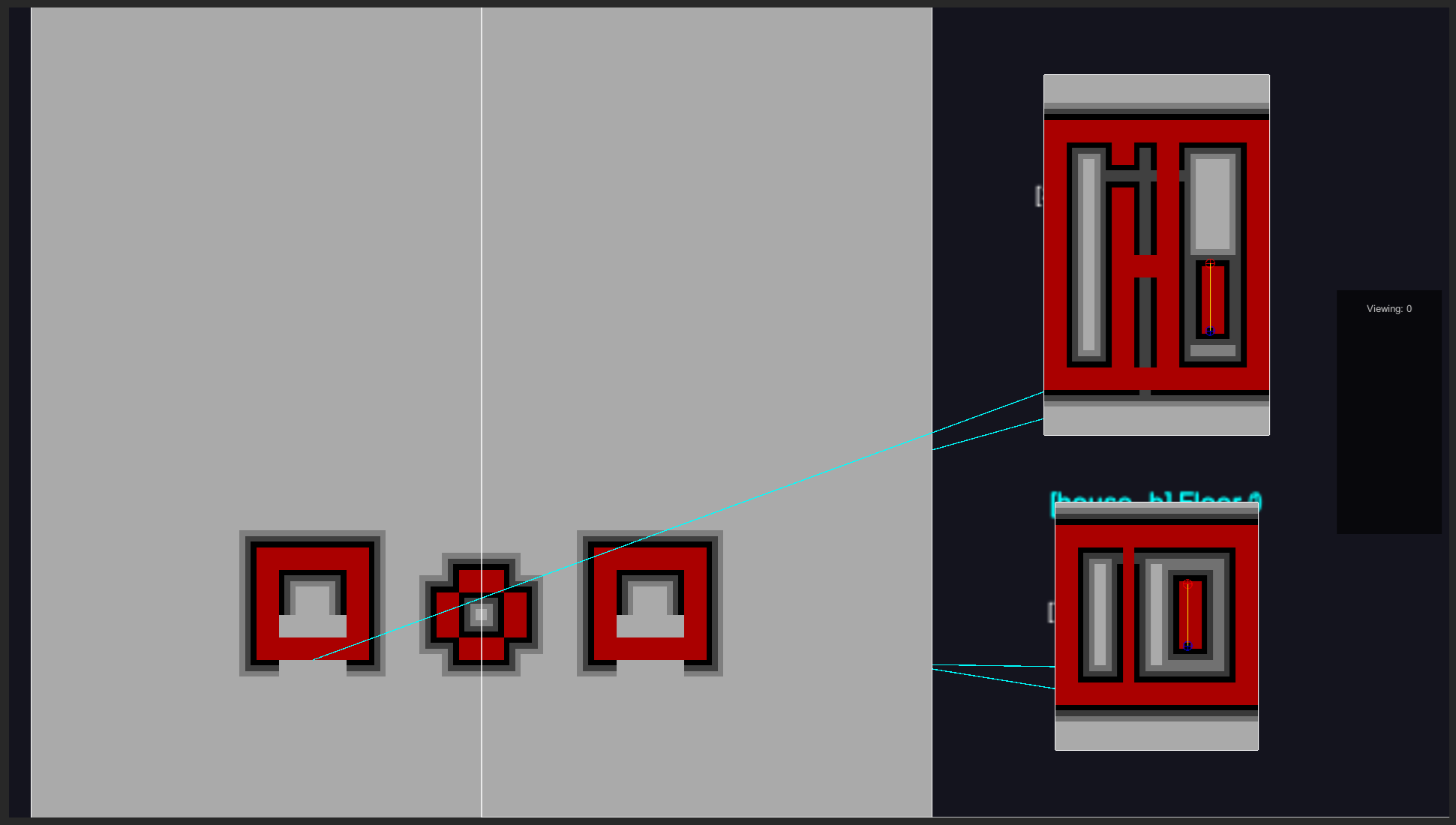
Penalty weights off
Greetings, Explorers and Enthusiasts
Not every development sprint ends with something you can show in a trailer. Sometimes the most important work is the work that happens entirely out of sight, deep in the engine, far from the player's eye.
The past three and a half weeks were exactly that. No new biomes. No flashy UI. Just me, elbow-deep in the codebase, making sure the foundation beneath Eryndor is as solid as the world we're building on top of it. Let me show you what that looks like.
NPCs Go Everywhere: Cross-Grid Pathfinding
This is the headline work of the past few weeks. For a long time, NPCs in Eryndor have been limited to navigating within a single pathfinding grid, meaning they couldn't walk through doors, climb stairs, or move between floors of a building. That's now history.
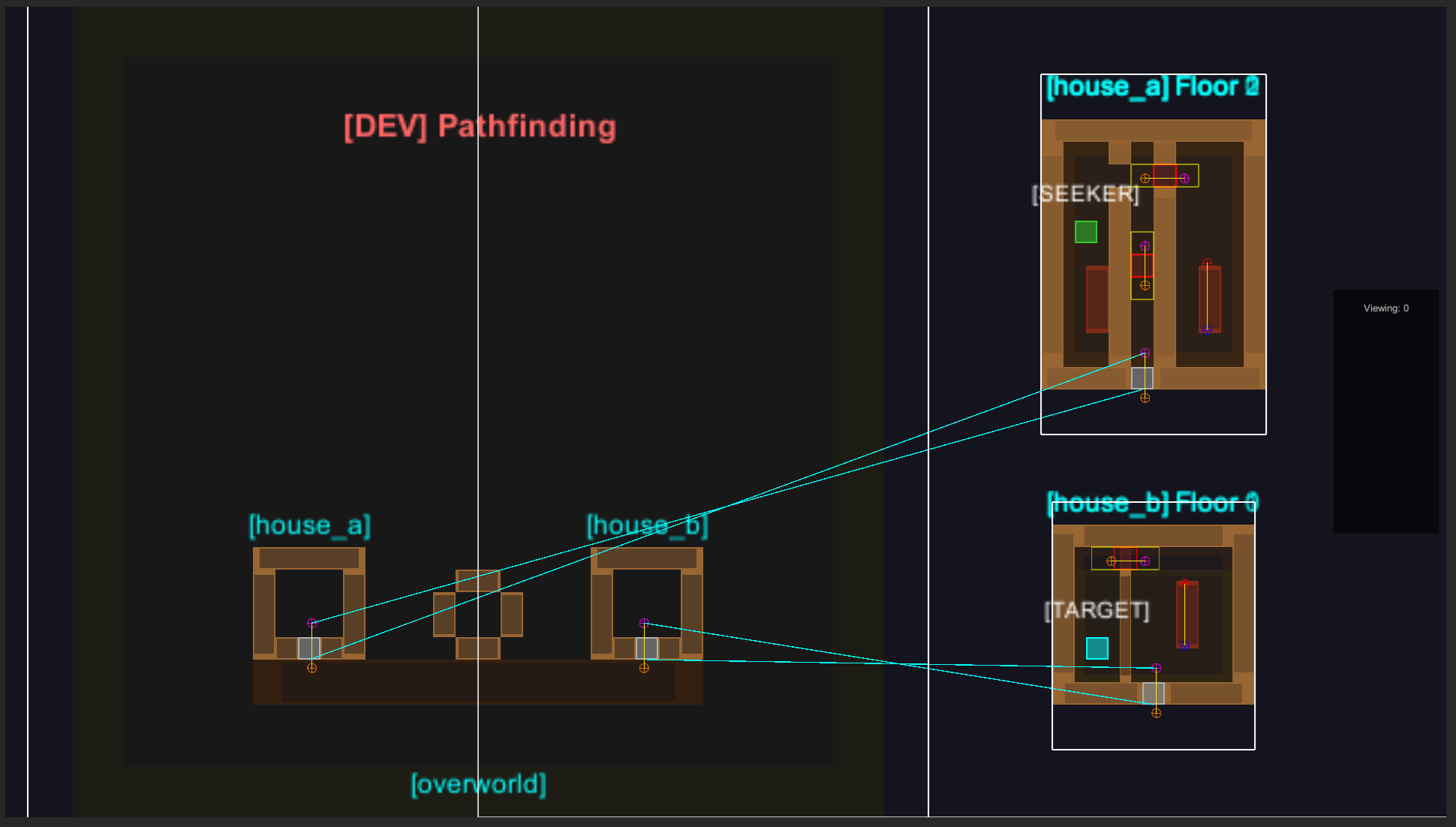
Implementing multi-hop cross-grid pathfinding means an NPC can now plan a route that says: "walk to this grid-changing, pass through it into the next grid, then navigate to the destination inside the building." Doors can now act as portal transitions between grids, and the system handles multiple hops in a single path, so an NPC can chain: outdoor grid, doorway, ground floor, staircase, upper floor.
In the video below, the Seeker starts on the first floor of house A, moves down to the ground floor, passes through a horizontal and a vertical door, then exits through the grid-changing door to the overworld. From there it walks to house B, enters through another grid-changing door, descends to the basement via the stairs, and passes through a horizontal door to finally reach the target.
Stair & Floor Transitions
Stairs and normal doors work differently from grid-changing doors. There's no discrete portal, just a zone where the character crosses between floors. We built a full floor transition system: when an NPC (or the player) enters a stair zone, the pathfinding switches grid, the floor manager triggers a smooth visual crossfade, and nearby objects on the new floor load correctly. The transition feels seamless.
Stair zones also emit proximity repulsion via BFS distance field. NPCs naturally avoid crowding the staircase bottleneck, which produces much more believable traffic patterns.
Smarter Obstacle Avoidance
While reworking the pathfinding grid, we replaced the old wall proximity penalty system with a BFS distance field approach. Instead of applying a fixed penalty based on proximity to any obstacle, the system now computes a proper gradient. Paths that hug walls are penalized in proportion to how close they get. The result: NPCs take routes that look more natural, hugging the center of corridors rather than scraping past walls.
Concept Art: The Steamy Puppet
We've been working on the design for one of Eryndor's late-game bosses: The Steamy Puppet. The idea is a steampunk marionette that serves as a high-skill, punishing encounter late in the game. Something that rewards patience, pattern recognition, and mastery rather than brute force.

Visually we're going for a tall, slender frame with exposed pistons and an unsettling marionette silhouette. A cracked porcelain mask, a compact boiler backpack, and hoses that arc upward like puppet strings. The color palette mixes tarnished brass, dark lacquered fogwood, and porcelain white.
Movement is dance-like, not beast-like. Weight shifts, toe-first steps, controlled pivots, and sudden bursts of speed that feel like pressure releases. Every attack has a clear telegraph so the player can learn the patterns and react accordingly.
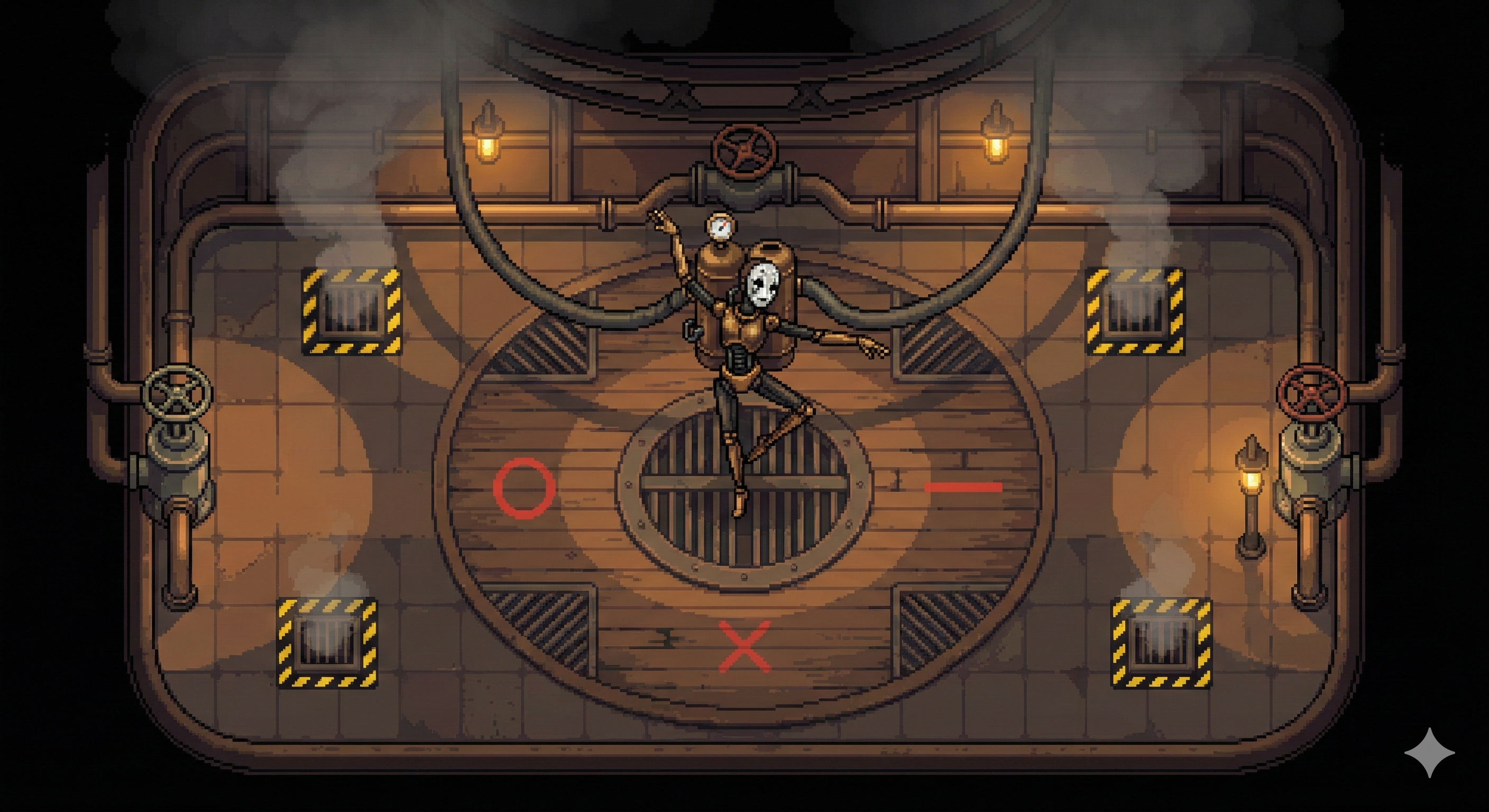
The arena is built around a pressure mechanic. The boss speeds up and unlocks new moves as pressure rises, and the player has to interact with valves around the arena to bring it back down. We're currently designing three distinct phases that escalate in intensity, each introducing new attack patterns and tighter windows.
The goal is a boss where every death teaches you something and every win feels earned. The player fantasy: "I learned the dance."
What's Next
With NPCs now able to navigate the entire world, the next big step is giving them something meaningful to say while they do it. We're building a dynamic conversation system that lets NPCs talk to each other and react to what's happening around them in real time.
That means NPCs won't just follow schedules silently. Two villagers passing each other on the road might comment on the weather, gossip about something the player did, or warn each other about danger nearby. A shopkeeper who witnessed a monster attack will bring it up in conversation. An NPC who saw the player help their friend will mention it days later.
The system ties into the story progression and world state. As quests advance and events unfold, NPC dialogue pools shift to reflect what's actually going on in Eryndor. The goal is a world where every conversation feels grounded in shared experience, not pulled from a static script.
Stay with us.
— Team Octiware